

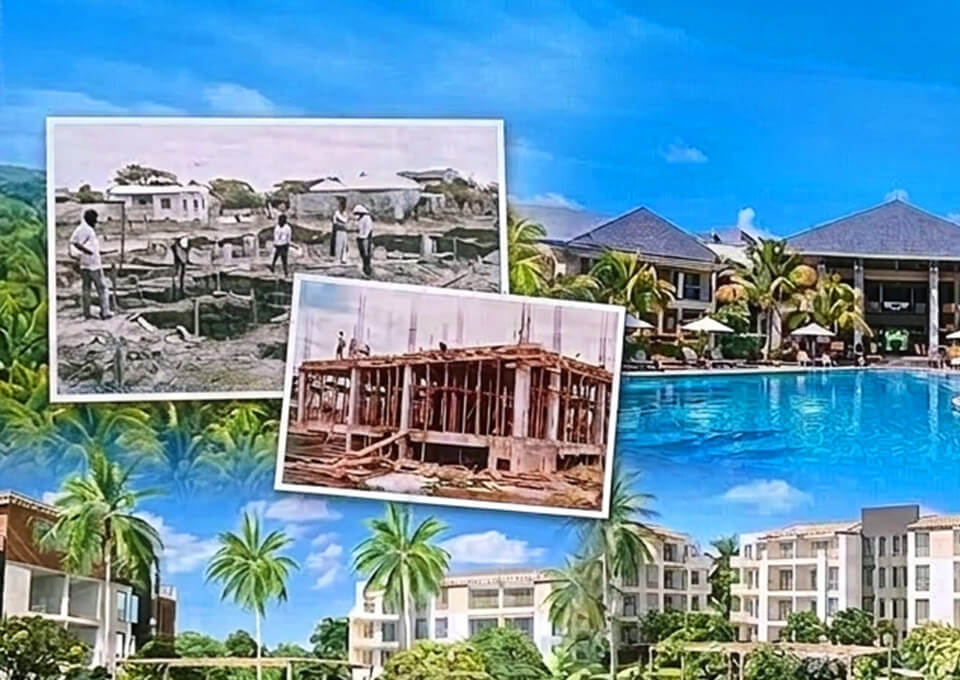
A long-term story, not an overnight success
In Mauritius, few property groups have shaped the built environment as consistently and durably as the Apavou Group. Over more than four decades, the Group has developed, owned, and managed assets across hospitality, commercial, and residential real estate, leaving a visible imprint on key locations across the island.
What makes the Apavou story notable is not just scale, but longevity. While many developers emerge during favourable cycles and fade when conditions change, Apavou has remained present across multiple economic phases. This continuity invites a deeper question: how did the Apavou Group build and sustain a real estate empire in Mauritius over 40 years?
The answer lies less in aggressive expansion and more in discipline, timing, and asset logic. Under the leadership and vision of Armand Apavou, the Group adopted an approach rooted in ownership, long-term relevance, and strategic patience.
This article examines how that approach translated into a durable portfolio, beginning with the early foundations that shaped Apavou’s trajectory.
The origins: From construction to property ownership
Building expertise before building assets
The roots of the Apavou Group lie in construction and development expertise. Before assembling a portfolio of major assets, the Group developed deep operational knowledge of how buildings are designed, delivered, and maintained.
This background proved critical. It allowed Apavou to understand cost structures, execution risks, and lifecycle performance long before many competitors entered the Mauritian property market with purely financial objectives.
For Armand Apavou, real estate was never abstract. It was tangible, operational, and tied to execution. This early grounding shaped how future projects were evaluated and delivered.
Timing the emergence of the Mauritian property market
Apavou’s rise coincided with important phases in Mauritius’ economic development. As the island diversified beyond agriculture into tourism, services, and trade, demand for structured real estate assets increased.
Rather than chasing every emerging opportunity, the Group focused on projects aligned with long-term national trends: tourism growth, commercial consolidation, and urban development.
This alignment between macroeconomic direction and project selection laid the groundwork for sustained relevance.
A portfolio built on ownership, not exits
Holding assets through cycles
One of the defining characteristics of the Apavou Group is its preference for ownership rather than rapid turnover. Many of the Group’s key properties were developed to be held, managed, and evolved over time.
In Mauritius, where liquidity can be limited and market sentiment shifts unevenly, this approach reduced exposure to short-term volatility. Assets were allowed to mature, stabilise, and compound value gradually.
This long-term holding strategy reflects a stewardship mindset more than a transactional one.
Reinvesting rather than rotating
Instead of rotating capital aggressively through asset sales, the Group often reinvested in existing properties. Upgrades, repositioning, and operational improvements extended asset life and preserved competitiveness.
This reinvestment logic would later become visible across the Group’s flagship properties.
Hospitality as a cornerstone of the empire
Hotels as destination anchors
Hospitality played a central role in Apavou’s portfolio development. As Mauritius positioned itself as a global tourism destination, the Group invested in hotel assets designed to integrate with their locations rather than exist in isolation.
Properties such as Ambre, La Plantation Resort & Spa, Indian Resort, Moreva, Mornea, and Bougainville became part of the island’s hospitality landscape.
These hotels were not conceived as speculative ventures. They were designed as enduring assets, with attention to site selection, operational flow, and long-term destination relevance.
Operational discipline in hospitality
Hospitality assets are among the most operationally demanding real estate classes. Performance depends not only on location, but on service consistency, maintenance, and brand positioning.
The Apavou Group’s construction and development background supported disciplined delivery and ongoing management, allowing hospitality assets to perform across tourism cycles.
Rather than constant rebranding, many assets were allowed to evolve incrementally, preserving identity while adapting to market expectations.
Commercial real estate and urban integration
Plaisance Mall as a structural asset
Among the Group’s commercial holdings, Plaisance Mall stands out as a structurally important asset. Located near a major gateway to Mauritius, the mall was conceived as a functional commercial hub rather than a purely experiential retail destination.
Its design prioritised accessibility, tenant diversity, and everyday utility. This positioning allowed it to remain relevant even as retail formats evolved.
Unlike trend-driven retail developments, Plaisance Mall reflects a conservative, use-driven approach that aligns with long-term commercial demand.
Commercial assets as stabilisers
Commercial real estate provided income diversification within the Apavou portfolio. While hospitality revenues fluctuated with tourism cycles, commercial assets offered more predictable cash flow.
This balance between cyclical and stable income streams contributed to overall portfolio resilience.
Residential development as long-term value creation
Terre d’été: Residential scale with planning discipline
The Terre d’été project represents Apavou’s residential development philosophy. Rather than fragmented or speculative housing delivery, the project was structured as a coherent residential environment.
Apartments were designed with livability, durability, and long-term occupation in mind. Layouts, circulation, and shared spaces reflected everyday use rather than short-term sales appeal.
This approach positioned Terre d’été as a lasting residential asset rather than a transient development.
Residential assets as capital preservation tools
In Mauritius, residential real estate often functions as a capital preservation vehicle. By delivering projects aligned with genuine housing demand, the Group strengthened its long-term portfolio stability.
Residential assets complemented hospitality and commercial holdings, further diversifying exposure.
The Cube: Modern offices with restrained ambition
Responding to evolving work patterns
The Cube represents Apavou’s approach to office real estate. Rather than pursuing speculative scale, the project focused on flexibility, efficiency, and professional usability.
Office space in Mauritius has historically faced uneven demand. By prioritising adaptable layouts and functional design, The Cube positioned itself for long-term tenancy rather than short-term leasing spikes.
Office assets within a diversified structure
Office assets played a supporting role within the broader portfolio. They were sized appropriately relative to market depth and integrated into the Group’s overall risk balance.
Governance, patience, and internal discipline
Decision-making over decades
One of the least visible but most influential factors in Apavou’s success has been governance. Decisions were made with long horizons, often favouring stability over speed.
Projects were not rushed to market simply because conditions appeared favourable. This restraint reduced exposure to poorly timed expansions.
Armand Apavou’s influence on discipline
The leadership approach associated with Armand Apavou emphasised execution, ownership, and continuity. This influence shaped organisational culture and investment logic.
Rather than chasing recognition, the Group focused on building assets that worked.
Why Apavou endured while others did not
Avoiding speculative overreach
Many property groups in Mauritius expanded rapidly during favourable cycles, only to struggle when conditions changed. Apavou’s measured approach limited overreach.
By sizing projects to market capacity and maintaining conservative capital structures, the Group avoided forced asset sales during downturns.
Context over trend
Apavou’s project selection consistently reflected context awareness. Whether hospitality, commercial, or residential, assets were aligned with local demand patterns rather than global trends.
This grounding in context helped sustain relevance over decades.
Navigating economic cycles without losing assets
Surviving downturns through balance
Over four decades, the Mauritian property market has experienced multiple economic cycles, influenced by global recessions, shifts in tourism, changes in regulation, and evolving financing conditions.
Many developers expanded aggressively during growth phases and were later forced to divest when conditions tightened.
The Apavou Group followed a different path. Its portfolio structure balanced cyclical assets such as hotels with more stable components including residential and commercial properties.
Avoiding forced exits
A defining feature of Apavou’s endurance has been the avoidance of forced exits. Conservative leverage, phased development, and diversified income streams reduced dependence on constant refinancing or asset sales.
Capital structure as a strategic tool
Conservative leverage over aggressive growth
Capital structure played a decisive role in sustaining the Apavou portfolio. Rather than maximising leverage to accelerate expansion, the Group maintained financing levels aligned with asset behaviour and market depth.
Matching debt to asset life cycles
Different assets within the portfolio carried different financial profiles. Long-term residential and commercial properties supported stable financing, while hospitality assets were managed with greater flexibility.
Asset evolution rather than replacement
Repositioning instead of redevelopment
Rather than replacing assets at the first sign of obsolescence, the Apavou Group often chose repositioning and incremental upgrades.
Incremental value creation
Value creation occurred gradually rather than through dramatic transformations. Small, consistent improvements accumulated over time.
Portfolio coherence across asset classes
Hospitality, commercial, and residential alignment
The Apavou portfolio was not a random collection of assets. Hospitality, commercial, and residential properties each served a distinct role.
Supporting assets through diversification
When one segment experienced pressure, others provided support. This internal balance allowed the Group to maintain stability.
Governance and internal continuity
Decision-making beyond individuals
Long-term success requires governance structures that endure beyond individual leadership.
Learning from experience
Over decades, the Apavou Group accumulated operational knowledge across asset classes.
The role of patience in building an empire
Time as a competitive advantage
Patience played a critical role in Apavou’s trajectory.
Compounding value through continuity
By holding assets over long periods, the Group benefited from compounding value.
Lessons for property developers and investors
Scale is not a substitute for discipline
Apavou’s history demonstrates that scale alone does not create durability.
Ownership mindset matters
Viewing assets as long-term holdings shapes better decisions.
Context beats replication
Projects were not replicated blindly across locations.
Why Apavou’s model remains relevant today
Endurance in a changing market
Mauritius continues to evolve, but the principles that guided Apavou’s growth remain relevant.
A reference point for long-term strategy
For observers and investors, the Apavou Group offers a reference point for sustainable property development.
An empire built on continuity, not excess
The Apavou Group did not build a real estate empire through rapid expansion or speculative risk-taking. Its success emerged from a consistent approach grounded in ownership, patience, and operational discipline.
Properties such as Ambre, La Plantation Resort & Spa, Plaisance Mall, Terre d’été, and The Cube illustrate how different asset classes can be integrated into a coherent long-term portfolio.
Under the influence of Armand Apavou, the Group demonstrated that in real estate, longevity is earned through decisions made quietly and consistently over time.
For markets like Mauritius, where land is finite and reputation endures, this lesson remains as relevant today as it was forty years ago.
 Next Post